


Modern medicine calls prostatitis one of the most common male diseases, which is often caused by a bacterial infection or poor lifestyle.What can be the treatment for prostatitis (the most effective pills, local medications, other methods of therapy) - more details in the article.
Causes and symptoms of the disease
Among the factors provoking the disease it is worth highlighting:
- maintaining a sedentary lifestyle (for example, when occupying a professional position that involves being in a monotonous position for a long time: office workers, salespeople, etc.);
- chronic constipation;
- disturbed rhythm of sexual life, which occurs with excessive sexual activity, prolonged abstinence, incomplete ejaculation;
- the course of a chronic disease (cholecystitis, bronchitis, etc.) or the presence of a chronic infectious focus (osteomyelitis, caries, tonsillitis, etc.);
- a previous urological disease (for example, cystitis) or a disease whose transmission route is sexual: gonorrhea, chlamydia, etc.;
- chronic stress;
- failure to maintain proper diet;
- regular lack of sleep.
Most often, the disease occurs as a result of general hypothermia, exposure to a specific infection on the body, as well as due to existing stagnation in the tissues of the prostate gland.
Important!The risk of pathology increases with chronic intoxication of the body (for example, alcohol or nicotine).

Other studies confirm the etiological factor associated with chronic trauma to the perineum.
This is often observed among professional cyclists and motorcyclists.
One of the main causes of the disease is stagnation in the tissues of the prostate gland.
If blood circulation in the capillaries is disrupted, this increases lipid peroxidation, swelling in the tissues and contributes to the development of infectious pathology.
The initial symptoms of the pathology are:
- increased urge to defecate (intermittency and difficulty in defecation);
- increase in general temperature;
- burning sensation in the perineum and urethra;
- pain syndrome that occurs during bowel movements;
- erectile dysfunction (prolonged erection);
- the appearance of light fibers in the urine;
- general malaise;
- mental suppression, increased anxiety;
- reduced potency.
Medicines in the treatment of illness
Treatment of the prostate is carried out using various medications.The type of medication is determined depending on what contributed to the development of the pathology.Complex therapy includes measures aimed at eliminating the cause of the disease, symptoms and increasing the protective function of the immune system.
Anti-inflammatory drugs
Non-steroidal anti-inflammatory drugs are considered the best medications for the prostate that can eliminate pain and inflammation.In addition, such medications are effective in reducing overall body temperature.
These include a remedy for prostatitis from the group of phenylacetic acid derivatives in the form of suppositories and injections, as well as a drug from the group of ethanoic acid derivatives in the form of tablets and solution.Despite their effectiveness, they have many contraindications for use, including diseases of the digestive tract.
For this reason, such medications are prescribed for a short period of time (3 days of therapy after a 7-day break).
Medicines with an anti-inflammatory effect are prescribed to every person with a diagnosed disease.When the body is exposed to a certain microorganism or other factor, its response manifests itself in the form of an inflammatory process that will need to be eliminated.
Oral medications are rarely used.The most effective will be suppositories and injection solutions.Tablets are prescribed if the presence of organic pathology of the rectum (hemorrhoids, atresia, etc.) is observed, which is an obstacle to the administration of suppositories.
Antibiotics and antiviral drugs
Modern effective remedies for prostatitis are antibacterial and antiviral.
In addition to tablets, injection solutions can be used.
Antiviral medications in the form of ointments are used if prostatitis is caused by a viral infection.
Immunomodulators
The best way to strengthen the body’s protective function and thereby speed up recovery is an immunomodulator.Any inflammation, including that which occurs in the prostate gland, develops against the background of a decrease in the state of the immune system.
Immunomodulators should be prescribed only by a qualified doctor who will correctly calculate the required dosage and duration of therapy.
Alpha blockers
An effective remedy that helps normalize urination is a selective competitive blocker of postsynaptic alpha1-adrenergic receptors.The medicine has a vasodilator, antispasmodic, hypotensive, hypolipidemic effect.
Contraindications to the use of tablets include hypersensitivity and obstruction of the gastrointestinal tract.
Organotropic agents
A new remedy for the treatment of prostatitis is a drug based on bovine prostate extract.The medicine belongs to the group of organotropes and is of animal origin.It helps reduce the severity of tissue swelling, eliminate pain and inflammation.
Taking the medicine reduces platelet aggregation, which helps prevent vascular thrombosis.
Hormonal agents
Hormonal drugs for the disease are prescribed if it is caused by excessive proliferation of prostate tissue.A decrease in the level of testosterone in the body is required, which helps to reduce the size of the gland, normalize hormonal levels, and reduce the intensity of the symptoms of the pathology.
Only your doctor should prescribe hormonal pills.Self-medication with such medications can be dangerous, causing negative consequences.
Herbal remedies
Effective treatment of chronic prostatitis involves the use of herbal remedies that have a natural composition.You can select a product with extracts of the fruits of the Sabal palm tree and horsetail herb, the components of which can accumulate in the tissues of the gland, thereby helping to reduce the intensity of the inflammatory process.
In addition, its components strengthen the protective function of the immune system and help protect cells from free radicals.This powerful and effective remedy eliminates difficulties with urination and relieves pain.
Physiotherapy
The most effective treatment is complex, when other treatment methods are used along with medications.One of these can be called physiotherapy.
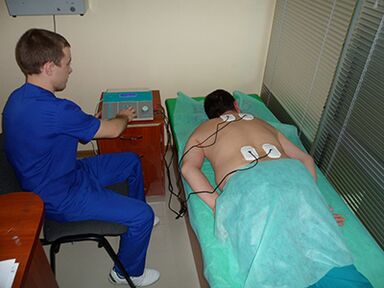
In the treatment of prostatitis, galvanization, electrophoresis with medicinal components, magnetic therapy, and high-frequency currents are used.
Physiotherapeutic treatment is often carried out together with medication.This combination does not affect the effectiveness of both methods.
There are no side symptoms when using physiotherapy.
The exception is individual intolerance to a particular method, which is diagnosed extremely rarely.
The most effective therapeutic procedure that can be performed at home is prostate massage.In this case, congestion is eliminated by normalizing blood circulation in the affected area.
The prostate gland is massaged through the anus, namely through the rectum.If no fluid is released during the massage, this indicates a serious complication.
Traditional methods
If prostatitis was diagnosed at the initial stage of development, you can try therapy with folk remedies, which sometimes turns out to be quite effective.
For example, you can use the following components:
- parsley: 1 tbsp.l.pour a glass of boiling water over the leaves and leave to infuse for a day; take the finished product orally before meals in a volume of 100 ml at a time;
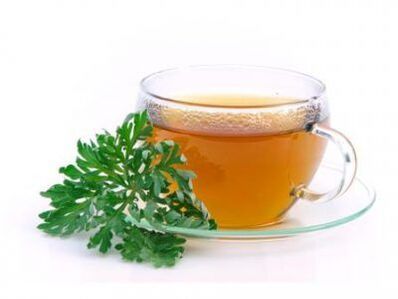
- wormwood: 1 tbsp.l.mix raw materials with 4 tbsp.l.dry thyme, pour a glass of boiling water and leave to infuse for a day; take the finished product orally, 20 g three times a day;
- celandine: dissolve 1 drop of juice in 50 ml of warm water, take the finished product orally 10 drops 1 time per day;
- honey: added to tea and various dishes instead of sugar;
- propolis: mix 100 g of propolis with alcohol in a volume of 200 ml and leave to infuse for 7 days, take the finished product orally, 1 tbsp.l.before bed.
Diet
With this disease, men need to adhere to a special diet.The features of the diet are determined taking into account the nature of the development of the inflammatory process and its severity.
Exclude from the diet those foods that contribute to the occurrence of an allergic reaction or exacerbation of pathology.
The following recommendations are also required:
- exclusion of alcoholic beverages from the diet;
- complete rejection of spices, as well as canned foods, semi-finished products, spicy and too salty foods;
- eating at the same hours;
- exclusion of fried and smoked;
- fruits and vegetables must undergo minimal heat treatment.
Pay attention!Prohibited foods include legumes, soda, animal fat, sweets, and mushrooms.
On the contrary, eating vegetable soup, dairy products, dried fruits and berries, vegetable oil, grain and bran bread, and seafood will be beneficial.

Prevention of pathology
In order not to waste time and money on expensive treatment, it is worth taking care of disease prevention, which is divided into primary and secondary.
Primary prevention measures for the disease include those that help improve blood circulation in the pelvic organs.This:
- maintaining an active lifestyle;
- going to the gym;
- daily walks in the fresh air;
- conducting special exercises;
- maintaining a proper diet;
- preventive massage;
- taking special medications (in some cases).
Secondary preventive measures are necessary if prostatitis has already begun to develop.The goal of such prevention is to prevent complications, relapse of pathology and its transition to a chronic form.
In this case, an active lifestyle, special gymnastics, and massage are required.
Treatment of the disease is carried out not only with the help of medications, but also with the use of other techniques.The doctor determines which method of therapy will be most effective for a particular person.It depends on the source of the disease and its characteristics.
You should not select medications on your own; you need to trust a specialist in this matter.